Day 4: Led-Astray — Exile and Fracture
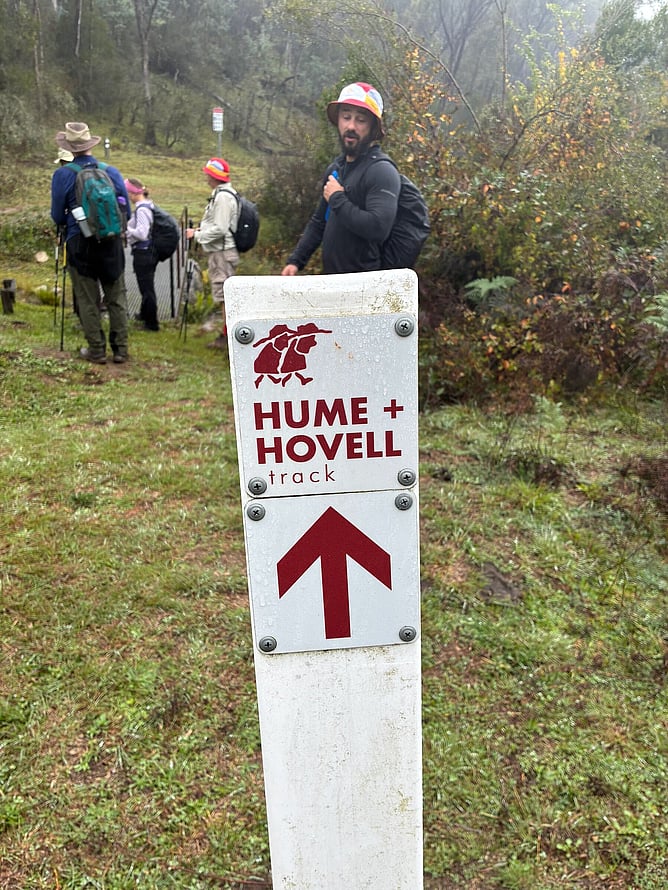
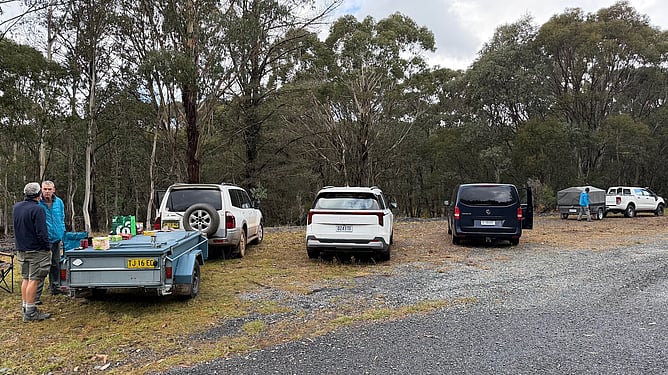
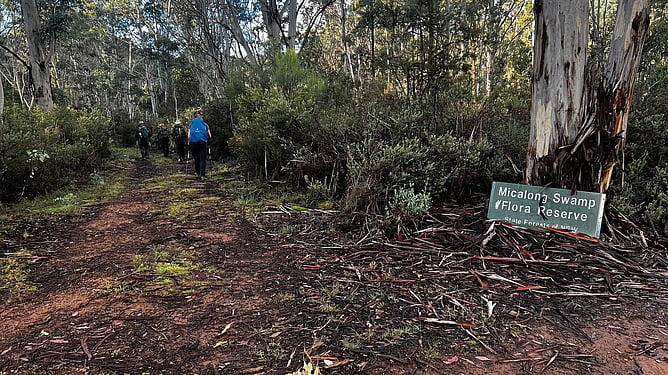
Day 4 of the ANZAC Way 2026 pilgrimage took the team along part of the Hume and Hovell Track, starting at Thomas Boyd Trackhead and finishing near where the track meets Brindabella Road.
The group walked about 25 kilometres.
It was, by all accounts, the toughest day so far.
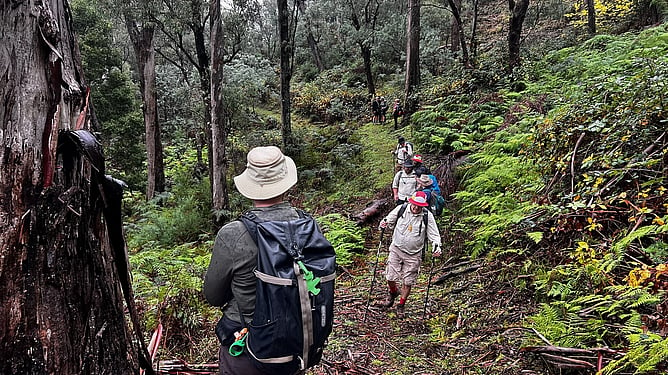
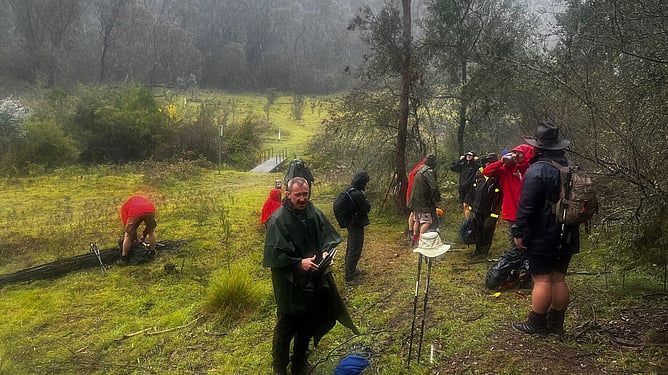
There was rain. There was fog. There were steep climbs. There were slippery rocky sections. And there were moments where the group simply had to slow down, take their time, and keep moving.
The theme for the day was Led-Astray — Exile and Fracture.
It was a fitting theme for a day that tested the body, but also gave space for deeper reflection.
A Tough Day on the Track
Sally, one of the veterans taking part in the pilgrimage, described the day plainly:
“It was a really tough day. It’s the toughest day we’ve had so far.”
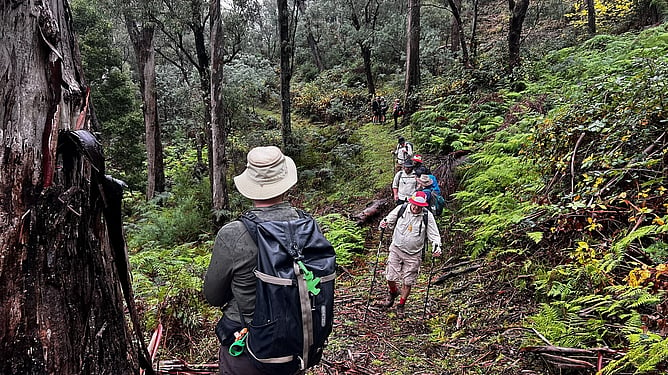
The track included a lot of steep climbing. One section stood out in particular — steep, rocky, wet and slippery. The team moved slowly through it and took their time.
There was no rush.
That mattered.
On a difficult day, the pace was not just about distance. It was about looking after each other, staying steady, and making sure people could keep going.
Sally said the hardest part was that steep and rocky climb in the rain:
“We just went really slowly up that bit and took our time. I didn’t feel rushed at any point.”
That is part of what makes a pilgrimage different from a race.
You still have to do the hard kilometres. But you do them together.
Mist, Rain and Hidden Beauty
The day did not offer many big open views.
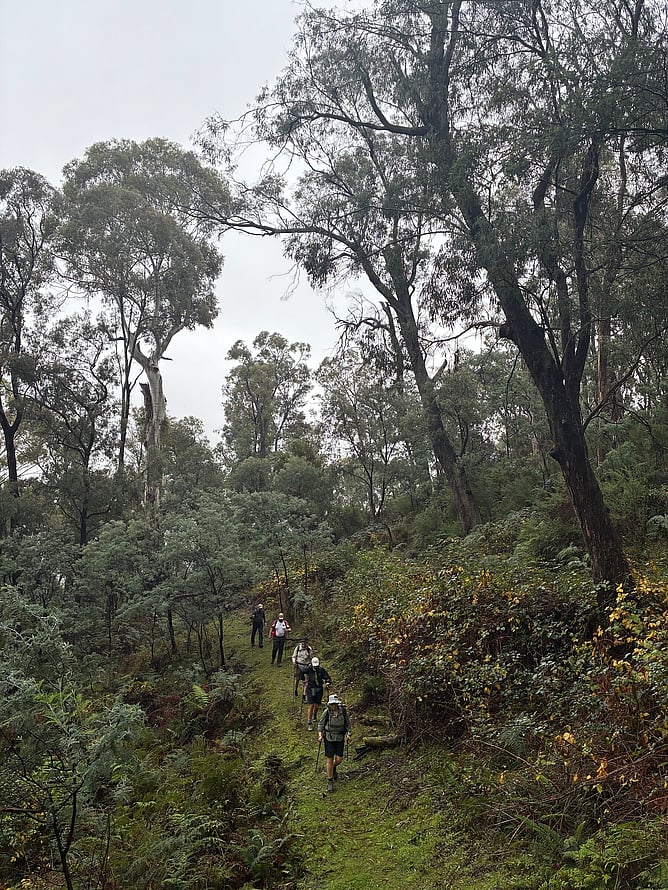
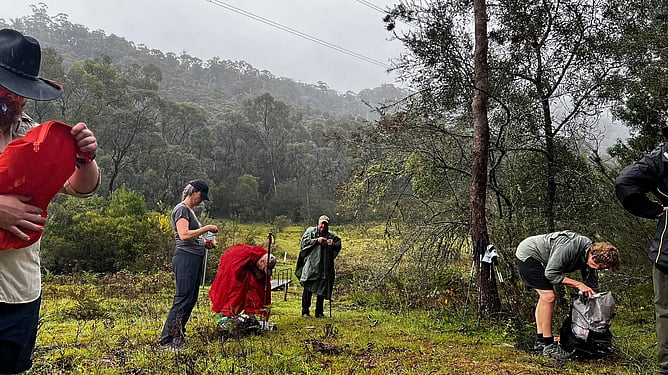
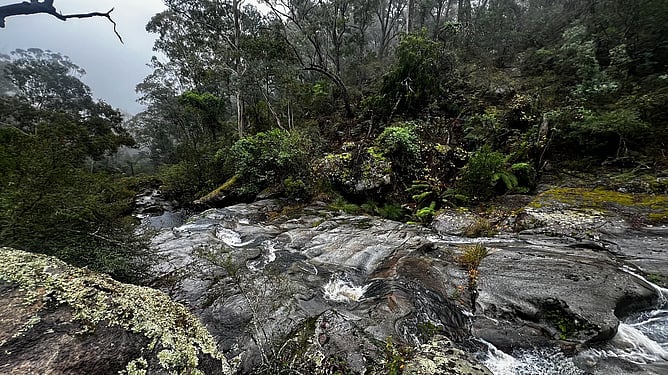
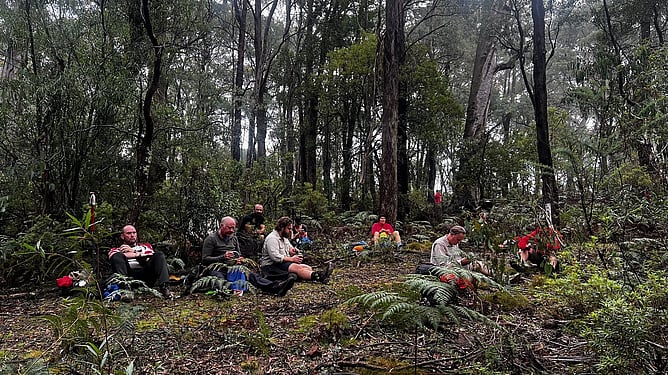
For much of the morning, the track was covered in fog and rain. The view was often limited to the trees, the track ahead, and the people nearby.
But that brought its own kind of beauty.
Sally described the country as special because it was hard to reach.
“I love going to places that are really hard to get to, because not many people get to see those places. They’re pretty special and pretty untouched.”
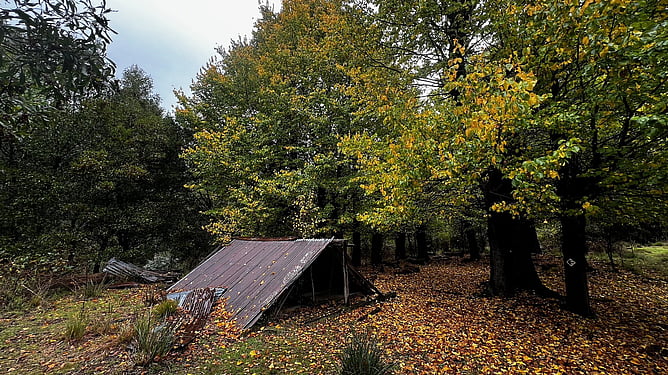
She noticed the old trees, the valleys, the forest sounds, and the small things people pointed out along the way.
Sometimes the most memorable parts of a walk are not the grand views.
Sometimes they are the quiet, close-up moments — the old trees, the birds, the sound of water, and the rhythm of footsteps on a difficult track.
Remembering Kokoda
At the beginning of the walk, Matt Rogerson, one of the guides, shared reflections about the Kokoda Campaign and the challenges faced by those who served there.
The steep terrain, rain and physical effort of the day gave the group a small window into the kind of hardship that has shaped Australian service history.
Bishop Grant also shared an emotional story about his uncle, who lost his life on the Kokoda Track. He spoke of his grandmother regularly placing flowers in remembrance of her son’s death at the local church in Leichhardt.
That kind of story brings remembrance close.
It reminds us that service and sacrifice are not abstract ideas. They are carried by families. They are remembered by mothers, fathers, children, siblings and communities.
Conversations Along the Way
One of the quiet strengths of the ANZAC Way is the conversation that happens while walking.
Sally walked with different people throughout the day. She spoke with Matt about a project in Greenland. She spoke with Bishop Grant about family and grandchildren. She moved between people, listened, talked, and observed.
She put it simply:
“I just find people really interesting. I think you can always learn from someone else, no matter who they are.”
That is part of the value of walking side by side.
The track gives people time.
There is no boardroom. No formal meeting. No pressure to have all the answers.
Just kilometres, conversation, silence, laughter and shared effort
Laughter in a Hard Day
Laughter in a Hard Day
Even on the toughest day so far, there was plenty of laughter.
Sally said the group had a lot of humour and good humour. Anthony was “always good for a laugh at the end of the day.” Lunch was full of laughter too.
There were also a few moments where the distance and climbing seemed to shift depending on who was estimating it.
At one point, Cam thought the group had gone about a third of the way. Later, it sounded like they had only gone a quarter of the way.
Matt also gave the hopeful news that the group was at the top of a climb — only for there to be another climb ahead.
On a hard day, those small moments matter.
Laughter does not remove the difficulty. But it helps people carry it.
The Relief of Finishing
When asked about the best moment of the day, Sally did not overcomplicate it.
The best moment was sitting down at the end.
There was relief. There was completion. There was the quiet satisfaction of having made it through a physically demanding day.
That moment matters on pilgrimage.
Not every day has to end with a big speech or a dramatic view. Sometimes the gift is simply stopping, breathing, and knowing the day’s work is done.
Finding Strength in Hard Places
The most meaningful moment for Sally came when she was walking alone.
In the forest, away from intrusive noise, there was space to think.
She noticed the sounds of the birds, the forest, and sometimes water running. The silence gave her room for deeper reflection.
For Sally, who understands hardship and challenge through her own life and veteran experience, the day’s theme connected with something real.
When asked how the theme of exile and fracture related to the walk, she said:
“Once you’ve been through tough things in life, when you face new challenges, you can always dig deep into those memories and realise that you have more strength than you think you do. And that if you’ve done tough things before, you can do this too.”
That is a strong word for veterans, families, carers and anyone walking through difficult ground.
Hard places do not have the final word.
Sometimes they teach us that we are stronger than we thought.
Day Summary
etail
Summary
Day: 4
Theme: Led-Astray — Exile and Fracture
Start point:
Thomas Boyd Trackhead, part of the Hume and Hovell Track
Finish point:
Near where the Hume and Hovell Track meets Brindabella Road
Distance:
About 25 kilometres
Conditions:
Rain, mist, fog, slippery rocky sections, steep climbs
Key story angle:
A physically tough day that opened space for remembrance, reflection and quiet strength
Interviewee:
Sally, veteran and ANZAC Way pilgrim
Historical reflection:
Kokoda Campaign and Bishop Grant’s family story of loss and remembrance
Best moment:
Sitting down at the end with a sense of completion and relief
Hardest moment:
A steep, rocky and slippery climb in the rain
Meaningful moment:
Walking alone in the forest and reflecting in the quiet

