Nerriga to Sassafras
Day 8 of the ANZAC Way 2026 pilgrimage was one of the longer days on the track.
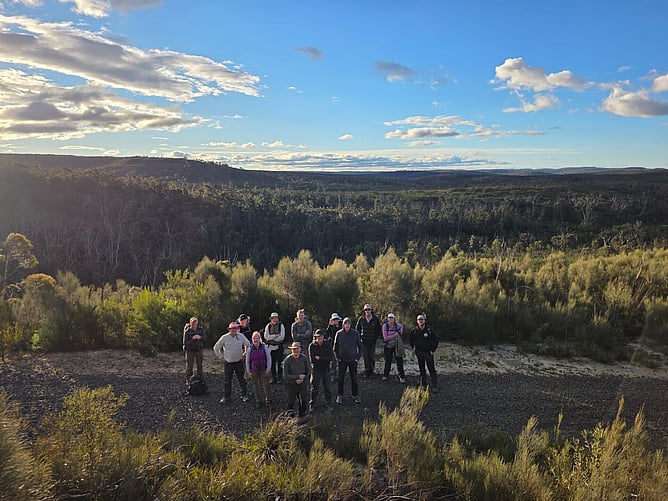
The group walked about 20 kilometres, all within Morton National Park, travelling from Nerriga to Sassafras. The day began with breakfast at the Nerriga pub, which opened especially for the pilgrims. That in itself was a generous and memorable start.
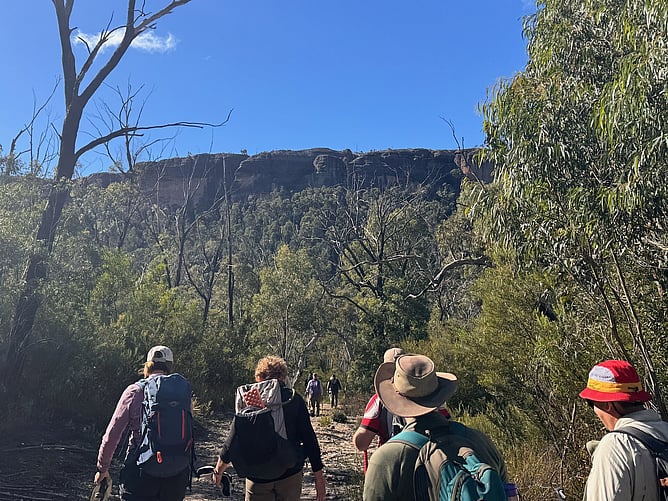
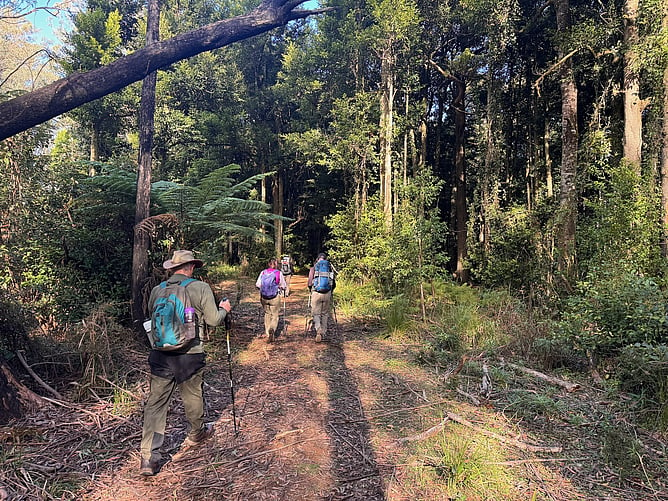
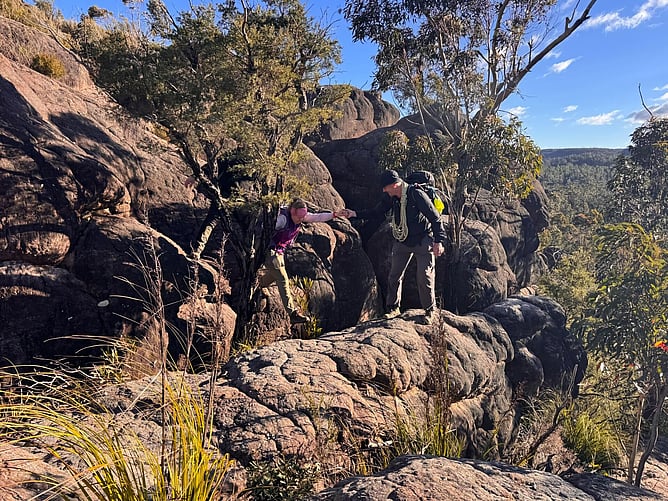
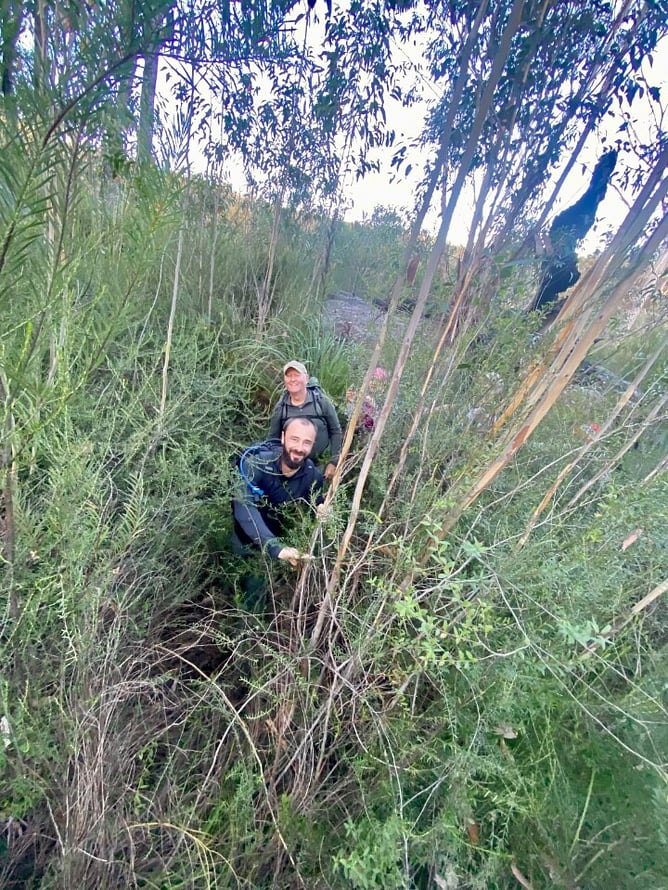
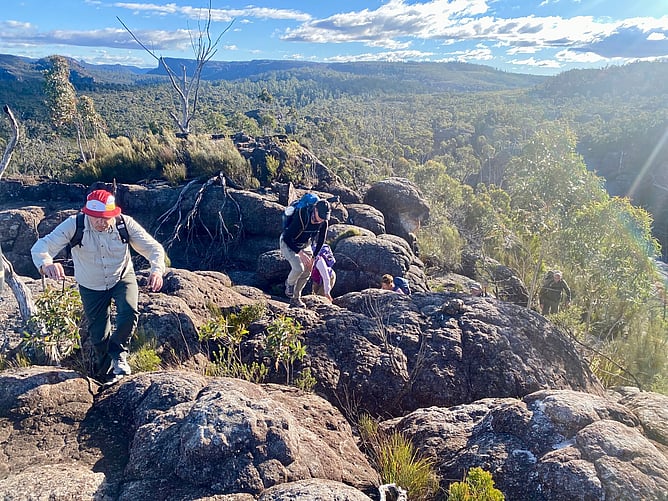
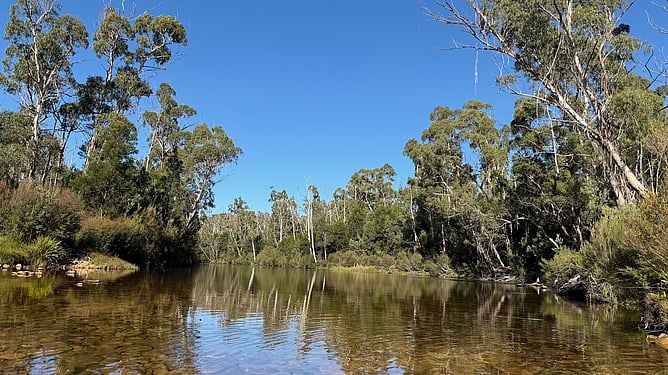
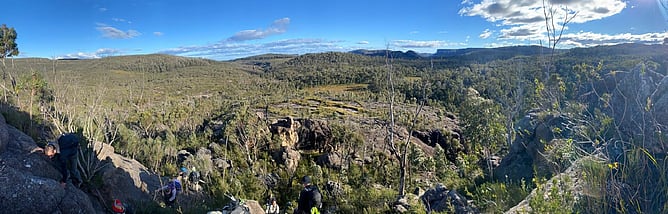
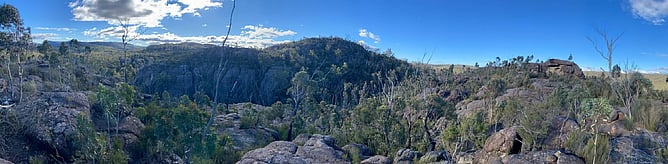
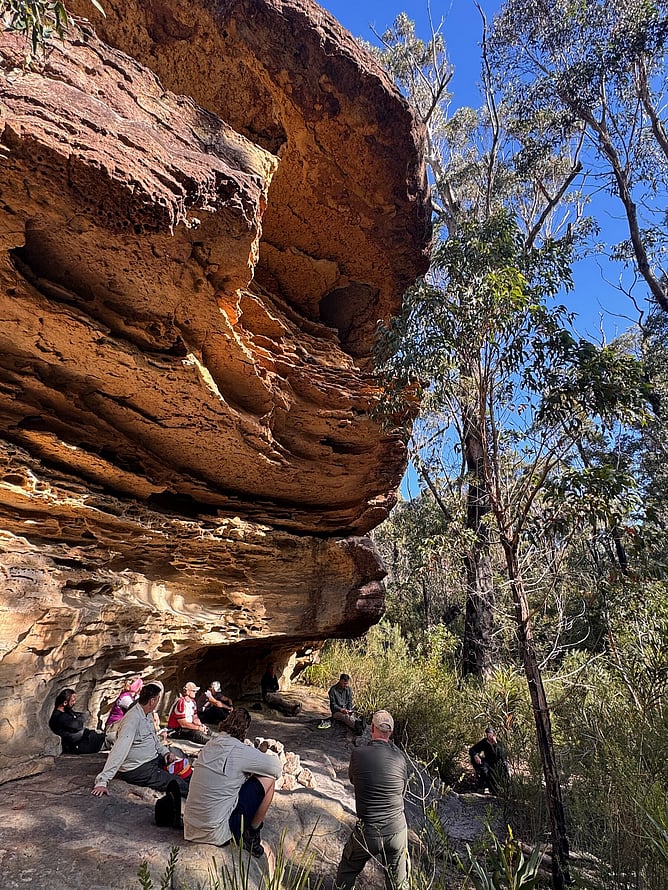
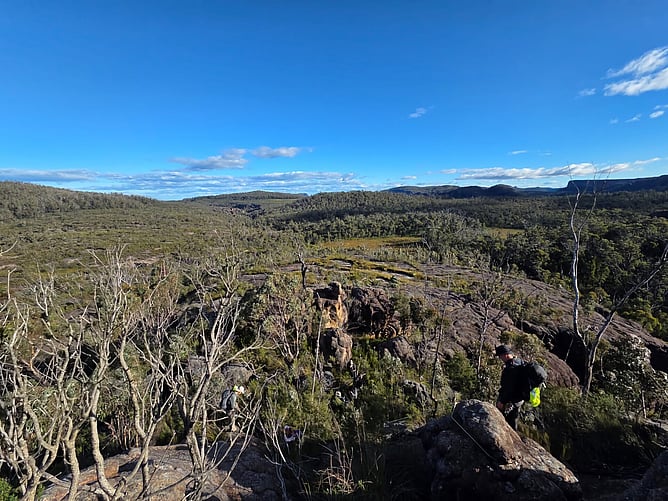
From there, the group headed out onto mostly fire trails, crossed four creeks, and later climbed up onto a ridgeline where the track became more demanding. There was sandstone to scramble over, a bit of wind and cold at the top, and at one point ropes were needed to help everyone get safely up the ridge.
There were a couple of spills and scrapes along the way. But as Cam said, it was worth it.
From the top, the view opened right out across the national park. Rock formations, open country, and a real sense of distance. After a hard climb, it was one of those places where everyone could stop, look out, and take it in.
Companions for the Journey — We need each other
The theme for Day 8.
The scripture for the day was Galatians 6:2:
“Carry each other’s burdens, and in this way you will fulfil the law of Christ.”
That theme fitted the day well.
This was not just a scenic walk. It was a long day, with rough ground, creek crossings, and a climb that required people to help each other. The theme was not abstract. It was happening right there on the track.
Cam reflected that the group had now been walking together for several days. People had become more comfortable with one another. They had started to understand each other’s pace, strengths, humour, tiredness, and quiet moments.
The day before, the group had tried walking in silence for a short time. On Day 8, they extended that practice for almost an hour.
Cam said that was one of the most meaningful parts of the day.
Not because people were talking. In fact, the opposite. They were quiet. But beneath the silence, people were thinking deeply about the question they had been given:
How do we carry each other’s burdens? How do I help others with their loads, and how do I let them help with mine?
That question sat with the group as they walked.
Walking Together, Even in Silence
One of the striking parts of Day 8 was that the group could be silent together.
That might sound simple, but it says something about the way the pilgrimage is growing.
Early in a walk, silence can feel awkward. People often fill the space with jokes, stories, or chatter. There is nothing wrong with that. But by Day 8, the group had settled into something deeper.
Cam described it as a sign that the group had grown.
They could walk together without needing to distract each other. They could give each other space. They could reflect, pray, think, and wrestle with the day’s question in their own way.
That is part of what makes pilgrimage different from just hiking.
The walking matters. The distance matters. The landscape matters. But the inner work matters too.
And sometimes that work happens quietly.
Keeping Going at the End
Even with the good weather and beautiful surroundings, Day 8 was still hard work.
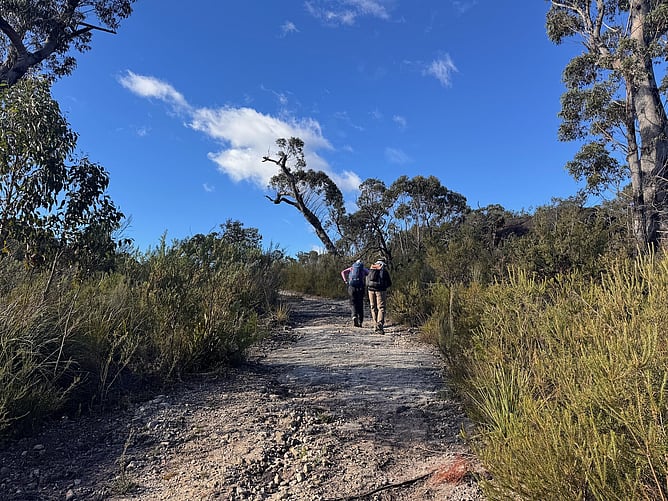
For Cam, the hardest part was simply keeping going at the end of the day.
After a long walk, it would have been nice to finish early. The body starts asking questions. The pack feels heavier. The feet are tired. The idea of stopping becomes pretty attractive.
But the group kept going.
That is part of the pilgrimage too.
Some days are about the big view from the ridge. Some days are about the conversation. Some days are about silence. And some days are simply about taking the next step when you would rather be finished.
That also connects with the Day 8 theme.
People do not just need companions at the dramatic moments. We need them at the ordinary tired moments as well. The last few kilometres. The quiet encouragement. The person who keeps pace with you when you are running out of energy.
That is often where the real support happens.
Remembering the Battle of Wewak
The military reflection for Day 8 was the Battle of Wewak in 1945.
Australians fought through jungle hardship in the final Pacific campaigns. The conditions were brutal: heat, exhaustion, disease, difficult terrain, and long months far from home. In those conditions, mateship was not sentimental. It was survival. Soldiers relied on the person beside them, watched out for one another, and kept going together.
That theme sat naturally alongside the day’s scripture from Galatians.
“Carry each other’s burdens.”
The ANZAC Way is not trying to say that a modern pilgrimage is the same as war. It is not. But it does draw lessons from those who served. It reminds us that people under pressure need more than personal toughness. They need trust, shared responsibility, and companions who will keep walking with them.
Cam also noted the connection with one of the support crew having served as the Commanding Officer of HMAS Wewak. That gave the reflection a more personal connection for the group.
The military story, the devotional question, and the physical demands of the day all came together around the same idea:
We are not meant to carry everything alone.
Cam’s Reflection on the ANZAC Way
Cam is a serving Defence Chaplain and the founder of the ANZAC Way.
Now in its second year, the pilgrimage has grown. Cam reflected that growth is not only about having more walkers or more support crew, though both are encouraging.
It is also about the way the pilgrimage has deepened.
There has been stronger community engagement. There has been more intention in how the walking time is used. There has been more focus on helping people reflect on their own journey, including how service in Defence has shaped them.
For Cam, one of the clearest reminders of why the ANZAC Way matters has come from walking with veterans.
He spoke about how the pilgrimage gives people a way to reflect on their time in service, what that service has meant, and where they may need spiritual health or spiritual healing.
That is a serious and important part of this project.
The ANZAC Way could have developed in many directions. But Cam was clear about its heart:
spiritual health and spiritual healing for veterans.
The physical pilgrimage is part of that. The walking, the hardship, the shared meals, the silence, the laughter, the prayers, the conversations, and the remembrance all work together.
It gives people a way to move forward.
Not alone, but with companions.
The Question for the Way
The Day 8 reflection ended with this question:
Who is walking beside you, and who might God be calling you to carry, or allow to carry you?
That is not only a question for the pilgrims.
It is a question for all of us.
Most of us are better at helping others than allowing others to help us. We like to be useful. We like to be strong. We like to keep going.
But Galatians 6:2 cuts both ways.
To carry each other’s burdens means sometimes I carry yours, and sometimes I let you help carry mine.
Day 8 made that visible.
On the fire trails. At the creek crossings. On the sandstone. In the silence. At the top of the ridge. And in the final kilometres when the group simply had to keep going.
The ANZAC Way continues to remind us that pilgrimage is not just about reaching the destination.
It is about learning how to walk together.